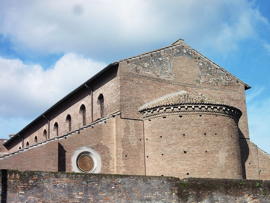
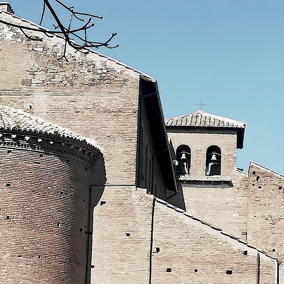
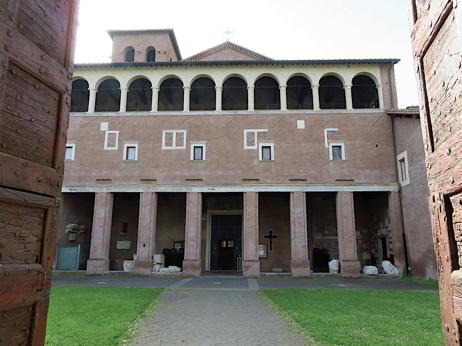
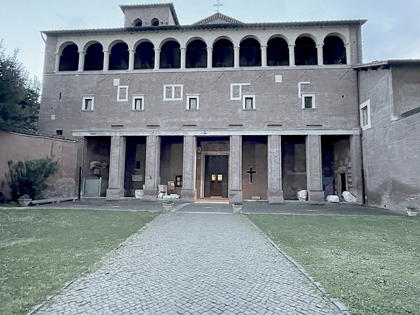
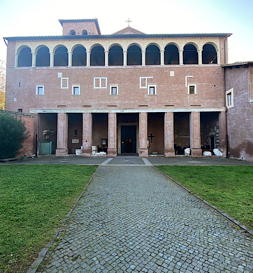
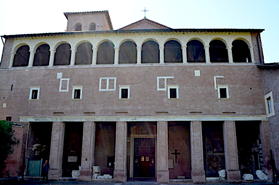
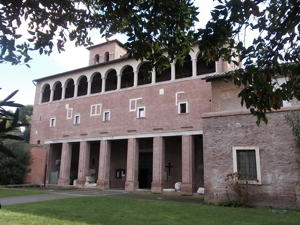
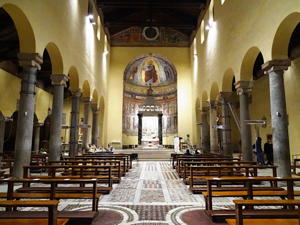
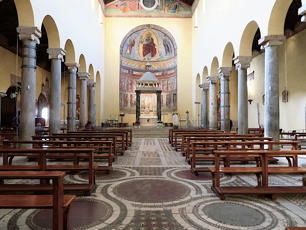
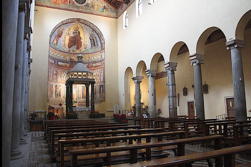
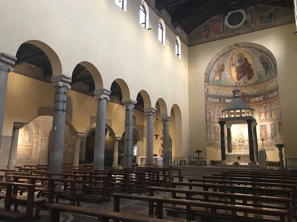
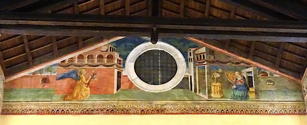
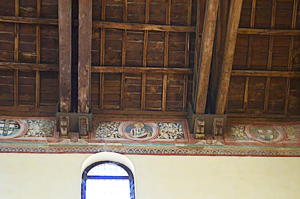
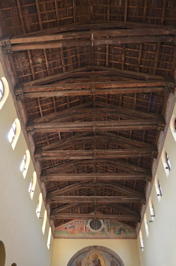
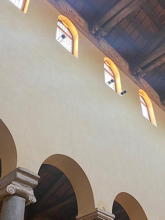
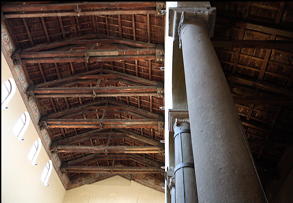
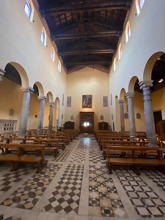
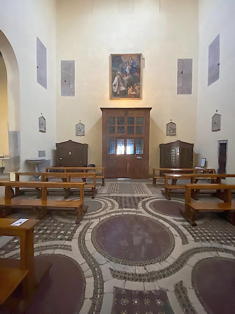
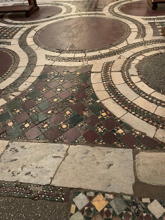
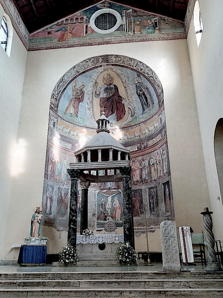
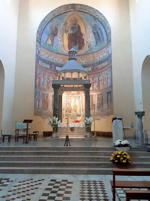
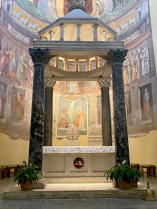
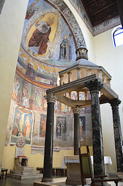
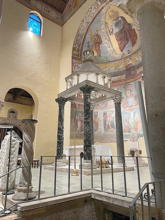
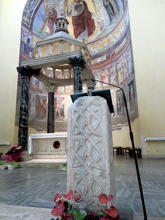
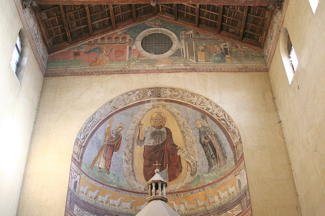
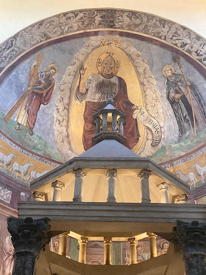
San Saba is a 10th century minor basilica, parish and titular church. The church is dedicated to St. Sabas, one of the fathers of Eastern monasticism, who was responsible for founding the lavra or monastery of Mar Saba, east of Bethlehem, in 483.
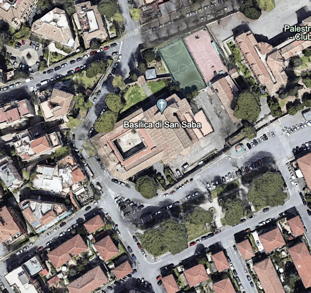
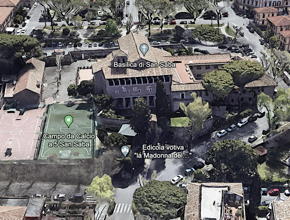
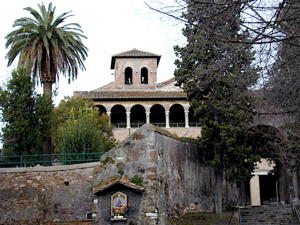
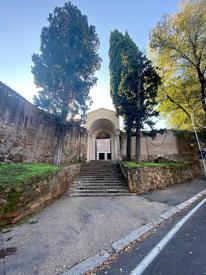
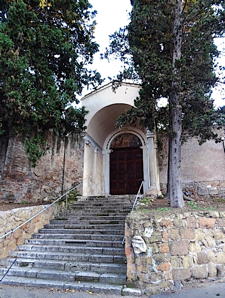
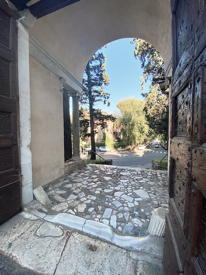
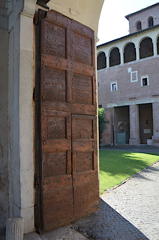
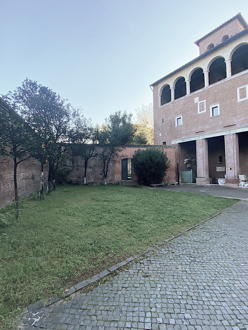
The church lies on the so-called Piccolo Aventino, which is an area close to the ancient Servian Walls next to the Aventine and Caelian Hill. The church was built on a platform and is surrounded by a large wall, parts of which are built with tufa blocks that may have come from these fortifications.
For reference, a plan of the church is available
here.
According to the church's foundation tradition, the site used to be a house that belonged to St Silvia, mother of Pope St Gregory the Great. In the year 645, Palestine fugitive monks from the order of Mar Saba (Palestine) who had fled their home country after the Islamic invasion, came to Rome to attend the Lateran council. After the council, these Sabaite monks settled down in an old domus here.
The monks remodeled the hall to create an oratory, which was dedicated to St. Sylvia. These early Christian remains were discovered beneath the north-western half of the nave pavement of the present church during excavations in 1900-01.
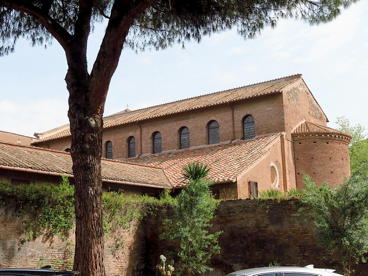
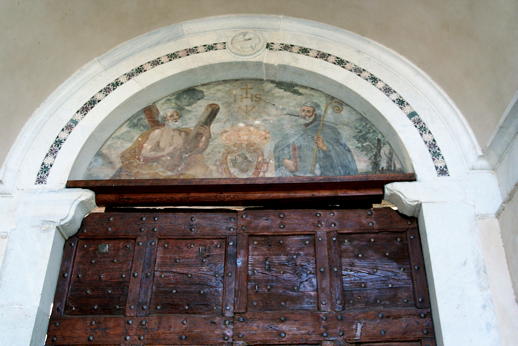
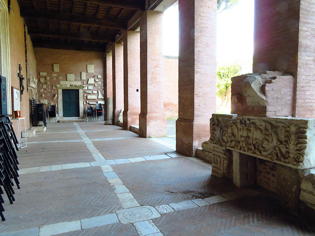
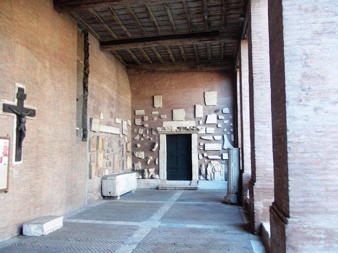
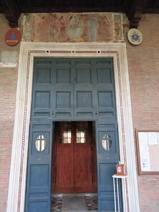
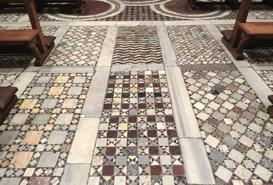
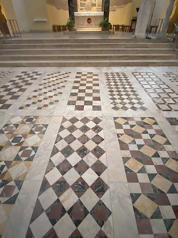
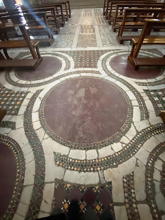
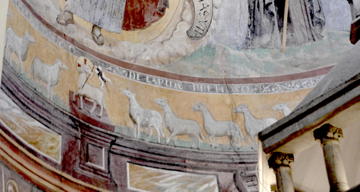
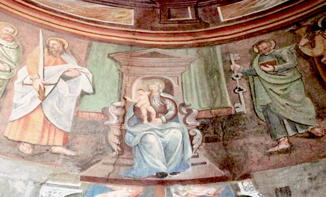
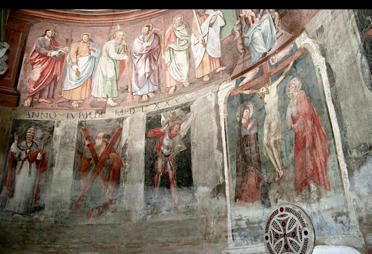
In the 10th century the monastery was granted to the Benedictine abbey of Montecassino. The monks immediately rebuilt the church in the form in which it now exists. Today's church is assumed built some time between 950 and 994 and rests on the part of the old walls of the chapel below. Pope Lucius II granted the monastery in turn to the Cluniac reform Benedictine congregation in 1145, but they found the church and monastery damaged in the Norman invasion of 1084. In 1205 they completely renovated the church giving it the new portal and decor done by Cosmati family,
In the next three hundred years there is little information on church and monastery, but in 1464 Pope Pius II gave the complex to Cardinal Francesco Piccolomini (the future Pope Pius III). He had the church thoroughly restored. When this was completed in 1465, he rededicated the church to San Saba and Sant'Ansano.
There was a major and much-needed restoration at the start of the 20th century, completed in 1909. The restoration involved the removal of Baroque items and a return to what was imagined to have been the appearance of the church in mediaeval times.
In 1931 the church was made parochial and entrusted to the Society of Jesus (Jesuits), which still administers the parish. There was another restoration in 1943.